Insights
Digital Assets and Wealthy Investors: Demand Is Ahead of Advice
- Crypto Asset Management
- Strategy
6 October 2026 · 6 min read
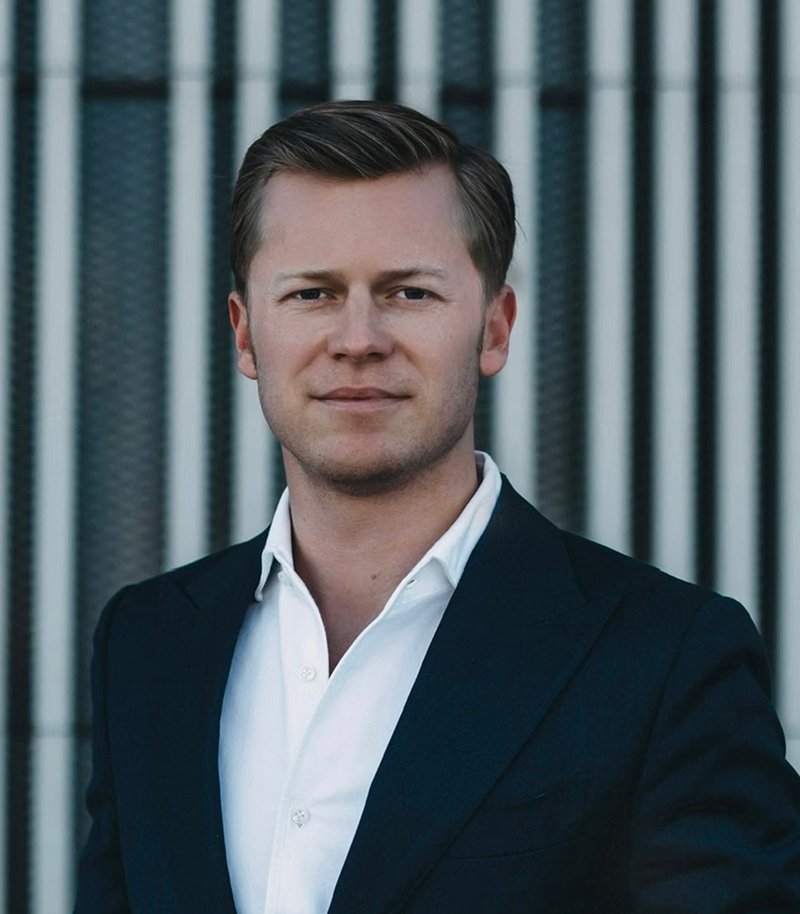
By Dominik Schneeberger, Founder & Managing Partner
Digital assets have long ceased to be a niche topic for forward-looking private investors. Bitcoin and other digital assets are increasingly becoming part of larger private portfolios – and therefore part of a broader question of asset allocation, risk management and wealth structuring.
How far this development has progressed is shown by a recent survey commissioned by crypto asset manager CoinShares from the French consultancy Vardaxoglou. It polled 2,230 wealthy investors in seven countries including Switzerland – among them 305 investors from Germany. Half had more than USD 1 million in investable assets, the other half between USD 500,000 and 999,999. A summary of the results was published by private banking magazin (in German).
For context: CoinShares itself offers crypto investment products. The figures should therefore be read as an indicator of direction, not necessarily as a neutral market measurement. The direction, however, is very clear: wealthy investors' interest in digital assets often exceeds what their traditionally oriented advisers offer – and that is precisely where a key shortfall lies.
Crypto is already part of many portfolios
According to the study, 70 percent of the German investors surveyed already hold digital assets. Across all seven markets, digital assets account for around ten percent of the portfolio on average.
This shifts the question. For many investors, it is no longer about whether digital assets belong in a portfolio, but how they can be integrated sensibly into an existing wealth structure – and which investment strategy best suits the individual investor.
For larger portfolios, looking at individual coins is not enough. What matters is strategic weighting, risk budget, liquidity, custody, counterparty risk and the correlation with traditional asset classes. A single investment theme becomes a question of the entire portfolio architecture and risk profile.
Investors and advisers are moving at different speeds
This is particularly evident in the relationship with advisers: 37 percent of German respondents who work with a wealth manager feel their adviser is too cautious about digital assets. In Switzerland, the figure is as high as 41 percent.
At the same time, 87 percent of German respondents say they lack the knowledge to make truly confident investment decisions. 69 percent would rather work with a wealth manager who has the relevant crypto expertise.
Of the German crypto investors, 40 percent have so far invested on their own but would be open to professional support. The need for advice and management therefore does not arise only before entering the market, but precisely where capital has already been invested.
This is exactly where a structural gap emerges: a strong willingness to invest on the investor side, but often no professional infrastructure yet and not enough expertise to integrate digital assets systematically and successfully into overall wealth.
What matters is not access, but integration
Buying Bitcoin is technically easy today. Choosing the right crypto investment strategy, the appropriate risk category and a robust technical infrastructure is an entirely different matter. The key questions wealthy private investors should ask themselves:
- •How large should the allocation be relative to total wealth?
- •How does a crypto allocation change the portfolio's risk profile, potential drawdowns and volatility?
- •Which investment strategy is most suitable? Active or passive?
- •What maximum loss is tolerated?
- •What potential risks arise from exchanges, custodians and other counterparties?
- •At what intervals does rebalancing take place?
- •What liquidity reserve makes sense?
- •How is positioning adjusted when the market regime changes?
- •Which external experts or wealth managers are engaged?
Some of these questions are answered in our pages on systematic risk management for crypto portfolios and our crypto investment strategy – others should be discussed in person with a specialised adviser.
The study also shows what investors look for when choosing a crypto adviser: 56 percent cite access to secure, regulated products, 53 percent the adviser's own track record with digital assets.
This point is also reflected in our own practice. Our clients value our long-standing market experience (since 2017), our international market overview and the transparency of our performance reports.
The requirements are shifting accordingly: theoretical knowledge of blockchain technology is not enough. What is needed is a combination of crypto-specific capital markets experience, asset allocation, portfolio architecture, risk management and a technical and operational understanding of the underlying infrastructure.
Not just a generational topic
The study's sample is comparatively young: half of the participants are between 40 and 49 years old, only 7.5 percent are over 60. Accordingly, crypto allocations are higher among younger respondents: those aged 18 to 44 hold on average 12 percent of their portfolio in digital assets, those aged 45 and over 8 percent.
In our own work, however, we see that the topic has long since reached older investors too. A significant share of our clients are entrepreneurs and high-net-worth private clients over 60. Among investors who are already interested in crypto, we see a clear difference: younger investors often bring more hands-on practice and prefer to manage their crypto assets themselves. Older investors, by contrast, usually lack access to crypto assets as well as the technical know-how. Their willingness to hand over management and custody to a professional partner is therefore considerably higher in the 60+ age group.
Investment objectives largely differ just as clearly: older investors focus less on short-term price movements or multiplying their capital, and more on broad diversification, potential long-term excess returns, controlled risk and professional integration into their existing wealth.
As the asset class matures, however, the dividing line is likely to run less between younger and older investors – and far more between unstructured and professionally managed allocations.
From crypto allocation to wealth architecture
Digital assets should neither be viewed in isolation nor automatically be overweighted. Their role in a portfolio follows from objectives, risk capacity, investment horizon and the existing wealth structure.
At Digital Estate, we therefore see digital assets not as a separate product but as part of an overarching wealth strategy: with strategic allocation, systematic risk management, market-adaptive trading strategies, segregated management in a Segregated Managed Account and clean integration into existing structures, whether for private investors or within a family office.
The CoinShares study thus confirms less a short-term trend than a structural development: wealthy investors already hold digital assets in many cases. Professional advice and management now need to keep pace.
The next goal for digital assets is no longer adoption, but risk-adjusted integration into an existing, successful wealth architecture.
Do you already hold digital assets or are you planning an allocation? In a personal initial consultation, we will be pleased to assess your situation together and find the best solution for you.